Living on the Margin: The Exact Formula for Staying Above 75% Attendance
How many lectures you can miss before a college blocks your admit card, the arithmetic behind the 75% rule, and how to work out the classes needed to recover.
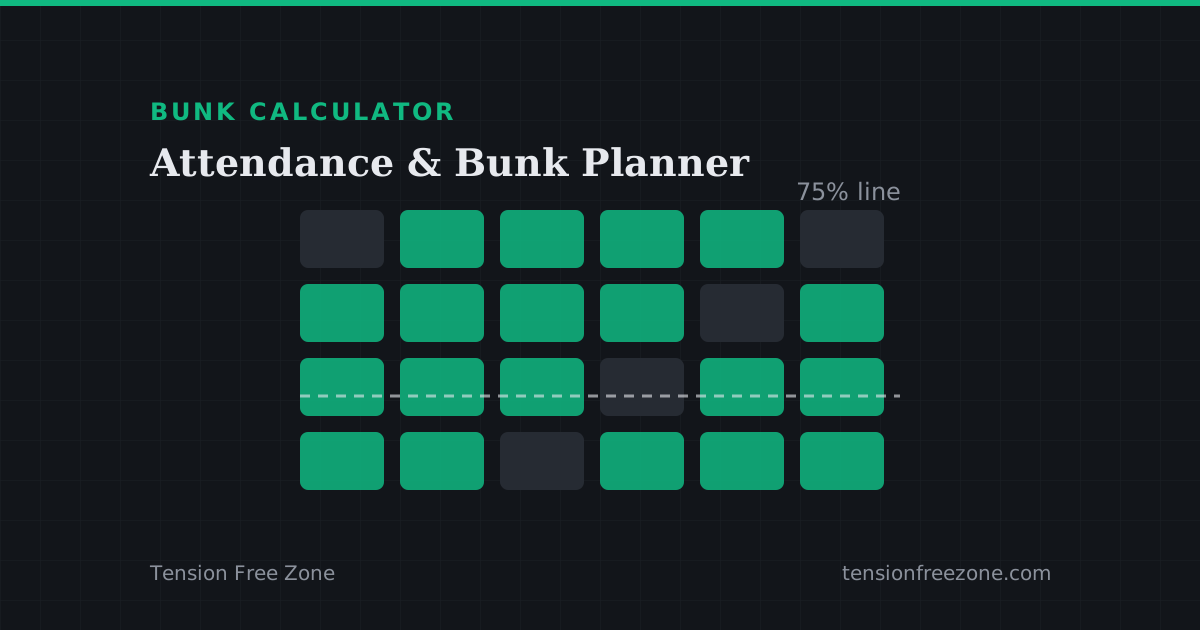
Every college has the same number, and every student learns it the hard way: 75 percent. A bunk calculator turns that number from a vague threat into something you can act on, because the useful question is never "am I safe", it is "how many lectures can I still miss, and how many do I have to attend to get back".
Guessing at it is how people end up at 73 percent in the week the admit card list goes up.
The arithmetic behind the 75 percent rule
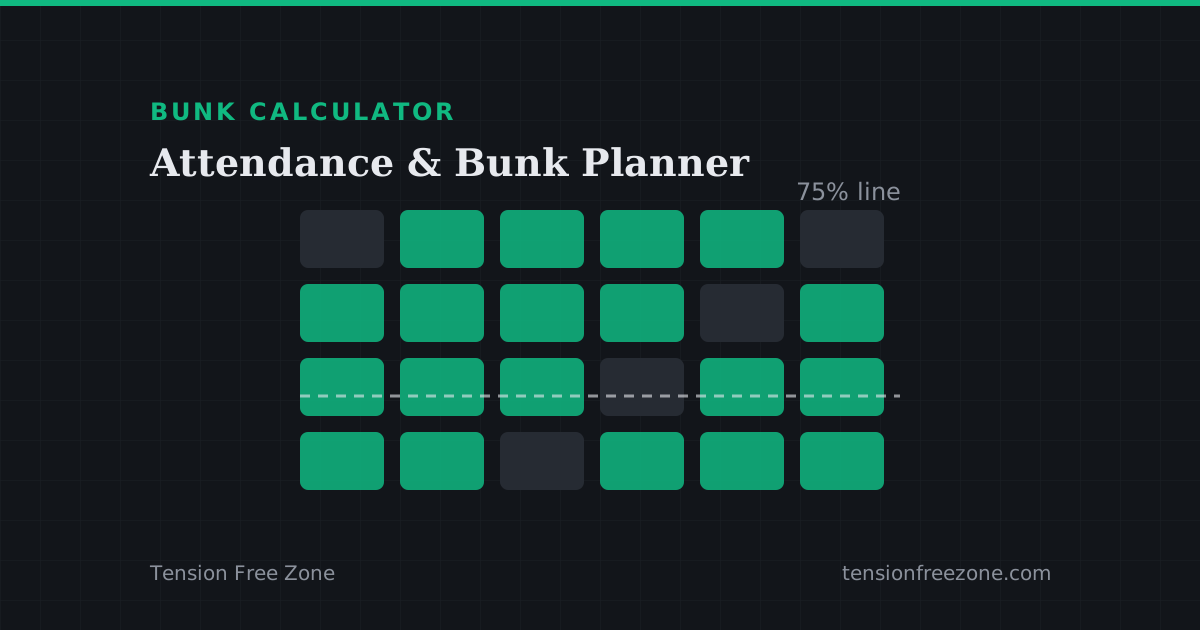
Your percentage is classes attended divided by classes conducted, multiplied by a hundred. The trap is in the denominator: it grows with every lecture that happens, so a comfortable percentage quietly slips while you do nothing wrong. Sixty attended out of eighty is exactly 75 percent. Miss two more of the next ten and you are at 66 out of 90, which is 73.3.
This is why the useful figure is a margin rather than a score. The margin is how many consecutive lectures you can miss from today and still finish at or above the target, and it is a different number every week.
How a bunk calculator reads your week
The honest way to get this right is to model the timetable rather than a running total, because lectures are not a single stream. A day-wise grid that knows which classes actually meet lets the tool exclude holidays, count a cancelled lecture the way your department will, and give you two numbers: the safe bunks left, and the classes needed to recover if you are already below the line.
- Set the semester dates and the target percentage your college publishes, which is often 75 but sometimes 70 or 80.
- Add multi-day breaks once, so a festival week does not need seven separate entries.
- Log attendance daily rather than reconstructing a month from memory the night before the internal assessment.
Recovering from a deficit without panic
If you are below the target, the number that matters is the recovery streak: how many consecutive lectures you must attend before the percentage crosses back over. It is almost always smaller than it feels, and it is usually achievable within two weeks of normal attendance, which is a very different message from "your attendance is low".
Attend the ones you were going to skip first. Clearing a deficit with lectures you would have attended anyway changes nothing, since those were already in the numerator.
Keeping the log to yourself
A daily attendance record is a precise description of where a student was and when, and there is no reason for it to live on a server. The attendance planner keeps its day-wise log, holiday ranges and settings in your browser, which is also why the tool keeps working on a campus connection that drops every few minutes.
Nothing about the arithmetic needs a network. That is worth remembering when a portal form is the only thing standing between you and a break.