The 30 Rule: Why Waiting Five Years to Start Investing Costs a Small Fortune
What a five year delay costs a monthly SIP, how an annual step-up bends the curve, and how to read a year by year projection rather than one figure.
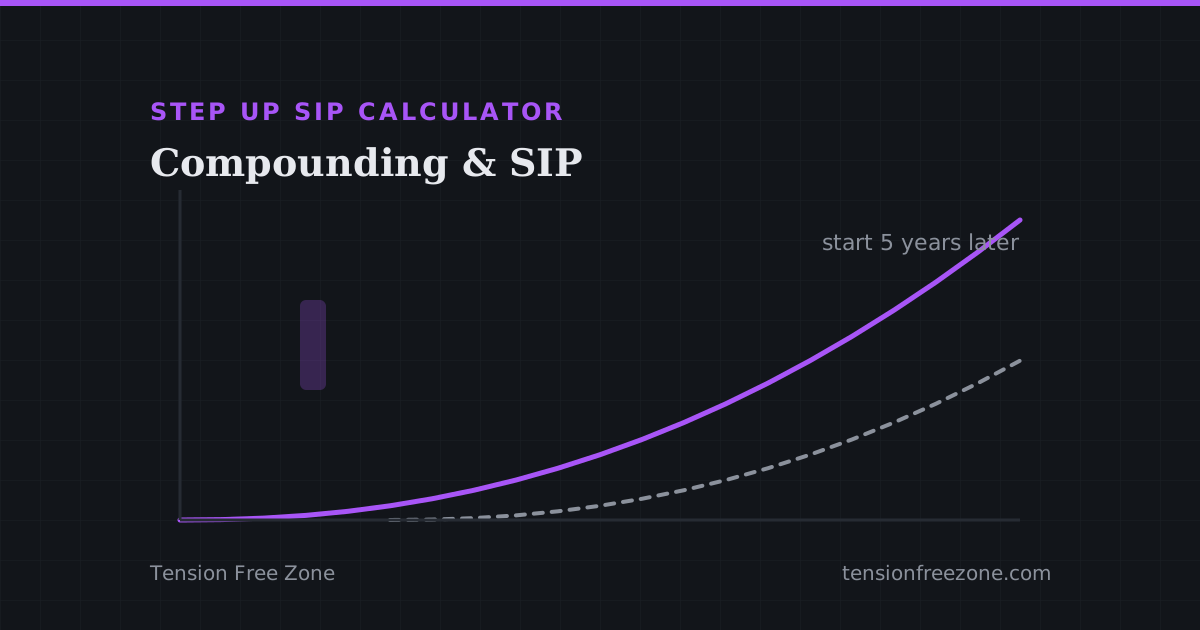
A step up sip calculator exists because one number is not an answer. "Invest a thousand a month and you will have a lot in thirty years" is true, unfalsifiable and useless. What changes behaviour is seeing the difference between starting now and starting in five years, with the same monthly amount, on the same chart.
The gap is not subtle, and it is not mainly about the extra money contributed. It is about the years at the end, when the balance is large enough that a single year of growth outweighs everything you put in at the start.
What the delay actually costs
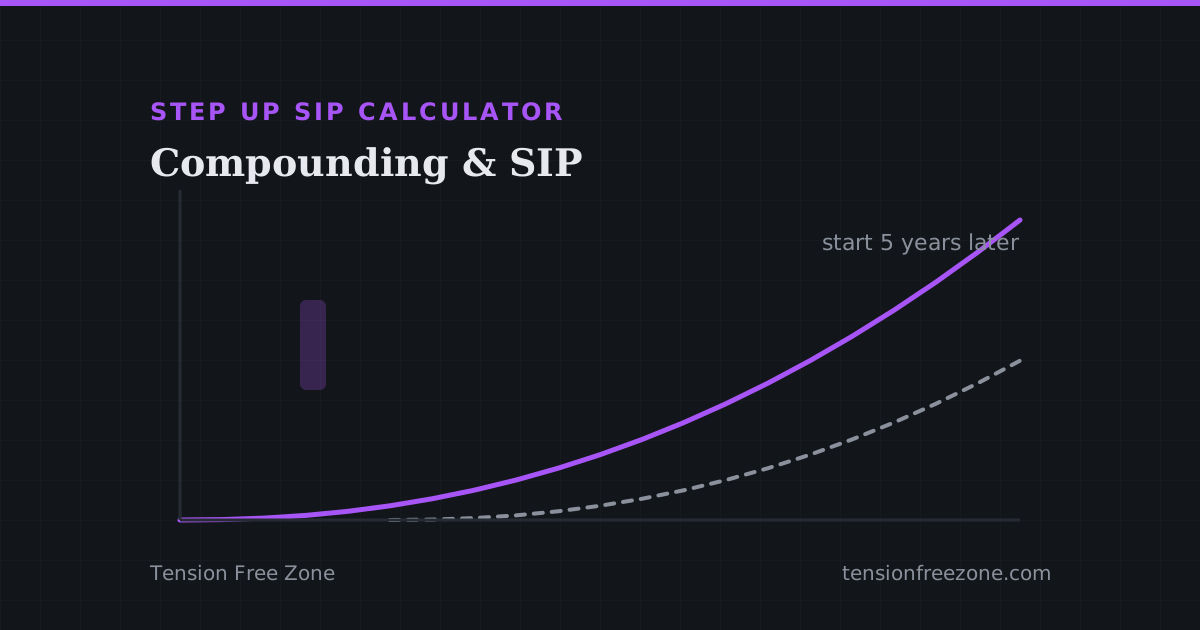
Compound growth means each year acts on a bigger base than the last, so the last years contribute far more than the first ones. Subtract five years and you remove five of the most productive years in the sequence, which is why the shortfall lands well beyond the contributions you skipped.
Run the same monthly amount twice in the SIP calculator, once starting immediately and once starting five years later, and read the two figures side by side. That comparison is the entire argument, and it is the one a number you have to take on trust cannot make.
Why a step-up changes more than a raise would
Increasing a contribution once is a level shift. Increasing it every year is a different curve, because the contributions keep pace with the salary they came from and the extra money arrives early enough to compound for decades.
This is the case for setting a step-up percentage rather than a fixed amount: it is the version of the plan you can keep when your rent goes up.
Reading a year by year projection properly
The projection is arithmetic on an assumption, not a forecast. Everything depends on the annual return you type in, so treat the rate as the question rather than the answer, and run it twice with a cautious number and a generous one to see how much of the result is the assumption.
- Look at the split between what you contributed and what growth added. Early on, contributions dominate; later, growth does.
- Change one input at a time, so you can attribute the difference to it.
- Check the frequency setting, because monthly compounding at an annual rate is not the same arithmetic as annual compounding at the same rate.
- Use the target mode when the question is the other way round: given a figure you want, what monthly amount reaches it.
Running the numbers without handing over your finances
Incomes, debts and savings targets are some of the most personal figures a person types into a website, and the products that ask for them usually ask for an email address too. The arithmetic here needs neither. It is multiplication and addition, and it runs in the tab.
That also means the calculator is honest about being a tool rather than advice: you set every assumption, and it shows its working year by year so you can disagree with it.