The Dealer Flat Rate Trap: What My First Vehicle Loan Actually Cost
A flat rate quote and a reducing balance rate are not the same number. What a bike loan EMI calculator says the loan really costs, and how the two compare.
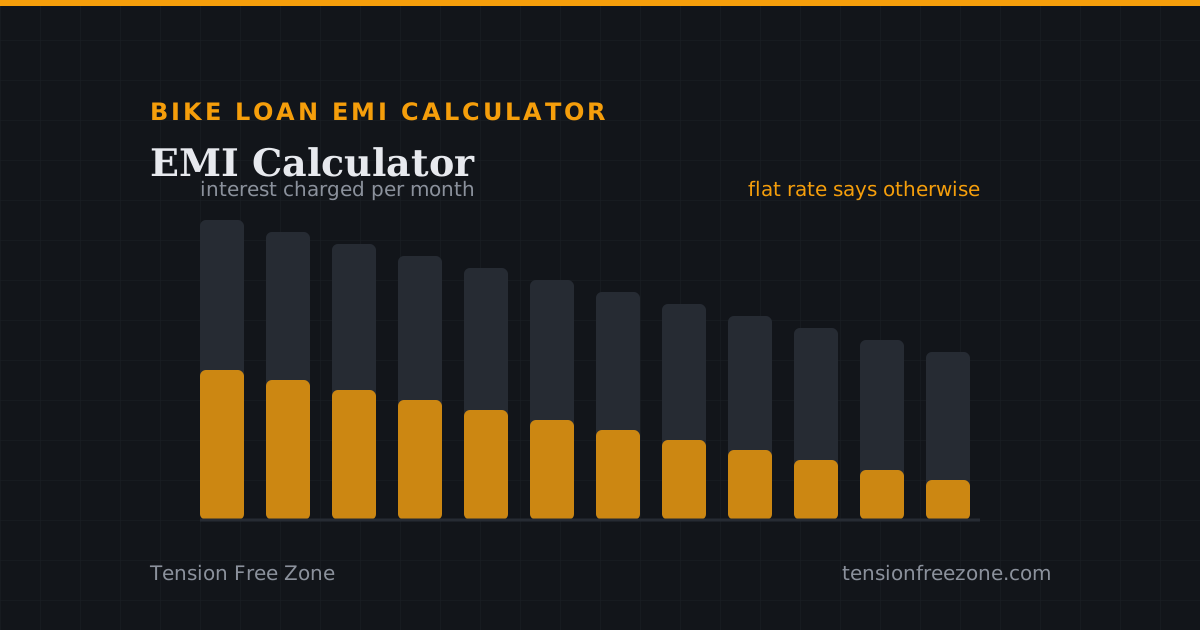
The number at the dealership is a flat rate, quoted cheerfully as simple interest. The number the loan actually behaves like is a reducing balance rate, and they are not the same figure, which is why a bike loan emi calculator is worth two minutes before a signature.
A flat rate of 5 percent sounds cheaper than a reducing rate of 9.5 percent. On a three year two wheeler loan it usually is not, and the difference is a couple of months of income.
How flat rate interest is calculated
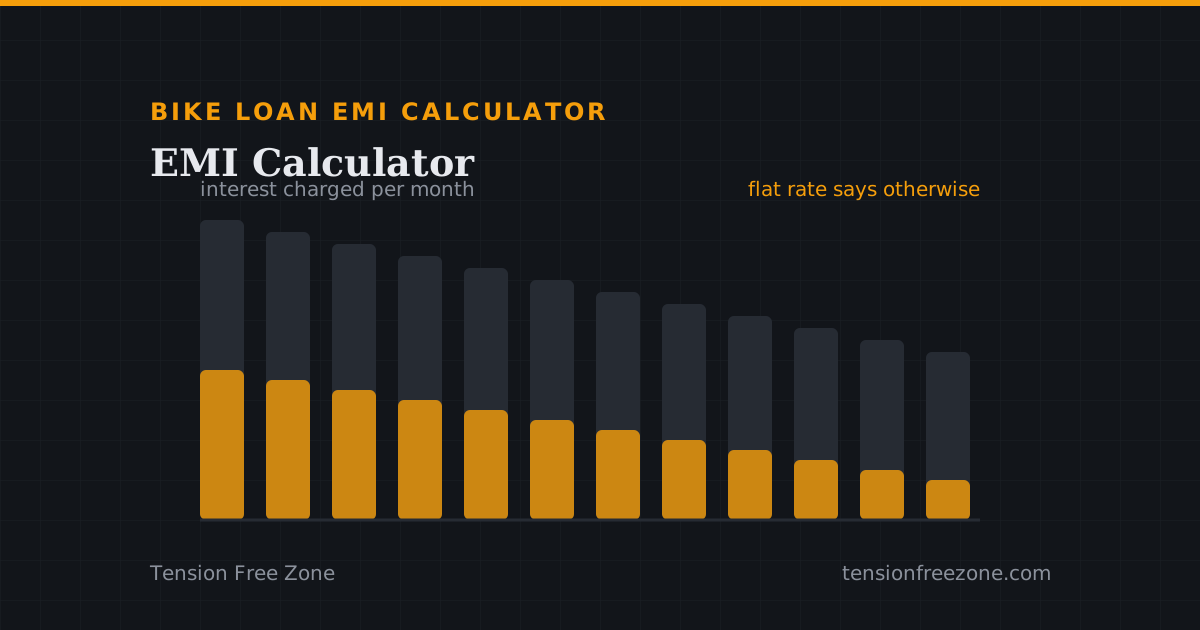
Flat rate charges interest on the full amount borrowed for the entire tenure, and then divides that total by the number of months. The interest on the part you have already repaid is still charged, which is why the rate looks small.
Because the principal is treated as if it never decreases, a flat rate is roughly equivalent to about twice that rate on a reducing balance loan. The exact conversion depends on the tenure, and the honest way to compare is to look at total interest and total payment rather than at either headline number.
What the monthly instalment really contains
On a reducing balance loan the instalment is a fixed payment applied first to that month's interest and then to the principal. Early instalments are mostly interest, later ones are mostly principal, which is why prepaying in the first year saves so much more than prepaying in the last.
The monthly instalment is the only figure most buyers compare, and it is the worst one to shop on. Stretching the tenure lowers it, raises the total interest, and makes the loan look gentler while costing more.
Comparing a flat quote with a reducing one
The comparison that settles this is not a rule of thumb, it is arithmetic on the quote in front of you. Enter the flat rate the dealer gave as well as the reducing rate you would expect to be offered, and the tool shows the same three figures for both: the instalment, the total interest and the total payment.
It also converts, which is the part no quote does for you. Because a flat rate is a percentage of the amount borrowed and a reducing rate is a percentage of the balance still owed, the two cannot be compared until one is expressed in the terms of the other. The card reports the reducing-balance rate that costs exactly the same as the flat quote — usually somewhere near double the quoted number — and the extra interest the flat quote adds. That single figure is what a flat vs reducing EMI comparison is actually for: it turns 'simple 5%' into the number the loan behaves like.
Running the two quotes properly
The EMI calculator takes the amount, the annual rate and the tenure, and returns the instalment, the total interest and the total payment. Run it once per quote and compare the totals, not the instalments or the advertised rates.
Then add the parts that do not appear in the rate: the processing fee, insurance bundled into the loan, and any foreclosure charge. Two quotes with the same rate can differ by several thousand rupees on those alone.
- Same tenure for both quotes, or the comparison is meaningless.
- Total payment over the life of the loan, not the monthly figure.
- Fees, insurance and prepayment terms, read before signing rather than after.
Salary figures in a browser tab
Loan calculations start from income, savings and other commitments, which makes a calculator an unusual kind of page: it receives a financial profile whether or not it stores one.
Here the arithmetic is local, the inputs stay in the tab, and the tool works with the network off. It is also honest about what it is: the instalment the numbers imply, with the working visible, rather than a recommendation to borrow.