One Multiplier, Fifteen Universities: Converting CGPA to Percentage Without Guessing
The 9.5 multiplier, when it is wrong, and how to convert CGPA to percentage the way your own university defines it, with worked examples.
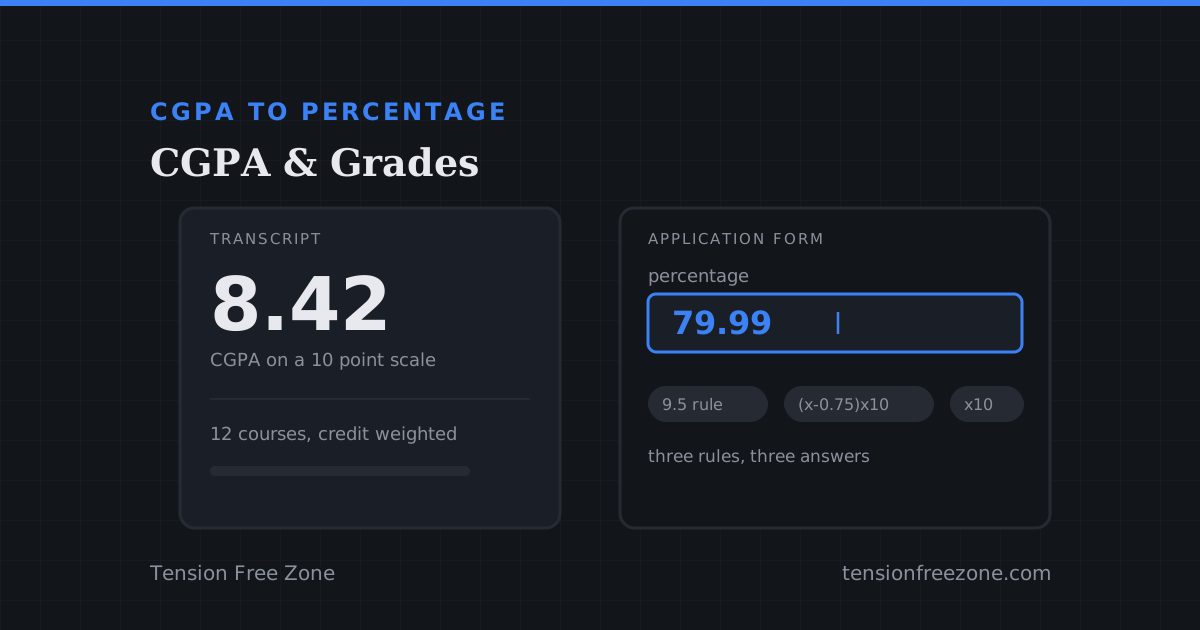
CGPA to percentage is the conversion every placement form asks for and no two universities define the same way. The rule most students were told in first year, multiply by 9.5, is one institution's convention rather than a law of arithmetic, and applying it to a 4.0 scale transcript produces a number that is not a percentage at all.
The conversion matters because a form has a box and a filter. A CGPA entered where a percentage is expected is read as a failing score, and a percentage that is four points lower than the official one can drop an application below a cut-off that the student actually clears.
Where the 9.5 multiplier comes from
On a 10-point scale, 10 is the top grade, and the convention behind the multiplier is that a 10 corresponds to about 95 percent rather than a perfect score. Multiply by 9.5 and the scale lines up: CGPA 10 gives 95 percent, 9 gives 85.5, 8 gives 76, and so on down.
That is an assumption about what a 10 means, and it holds only where the examination board or university says it does. It is a conversion convention, not a formula derived from the credits, which is why two students with identical CGPAs from different institutions can legitimately hold different official percentages.
The rules that are not 9.5
Three other conversions turn up often enough to check for by name before you guess.
- Multiply by 10: some universities treat 10 as a full 100 percent, which is simple and gives a higher number for the same transcript.
- Subtract a constant first: one common variant is (CGPA minus 0.75) multiplied by 10, which exists to bring the top of the scale down to 90 rather than 100.
- Scale proportionally: on a 4.0 system the usual practice is CGPA divided by 4 and multiplied by 100, which is a rough equivalence rather than a conversion the institution publishes.
- No published rule at all: plenty of universities only issue a conversion certificate on request, and that certificate is the number a form should be given.
A worked example
Take a CGPA of 8.42 on a 10-point scale. The 9.5 rule gives 79.99, which is reported as 79.99 or rounded to 80. The (CGPA minus 0.75) times 10 variant gives 76.7, and the times 10 version gives 84.2. Three defensible-looking numbers, spread over seven and a half points, from one transcript.
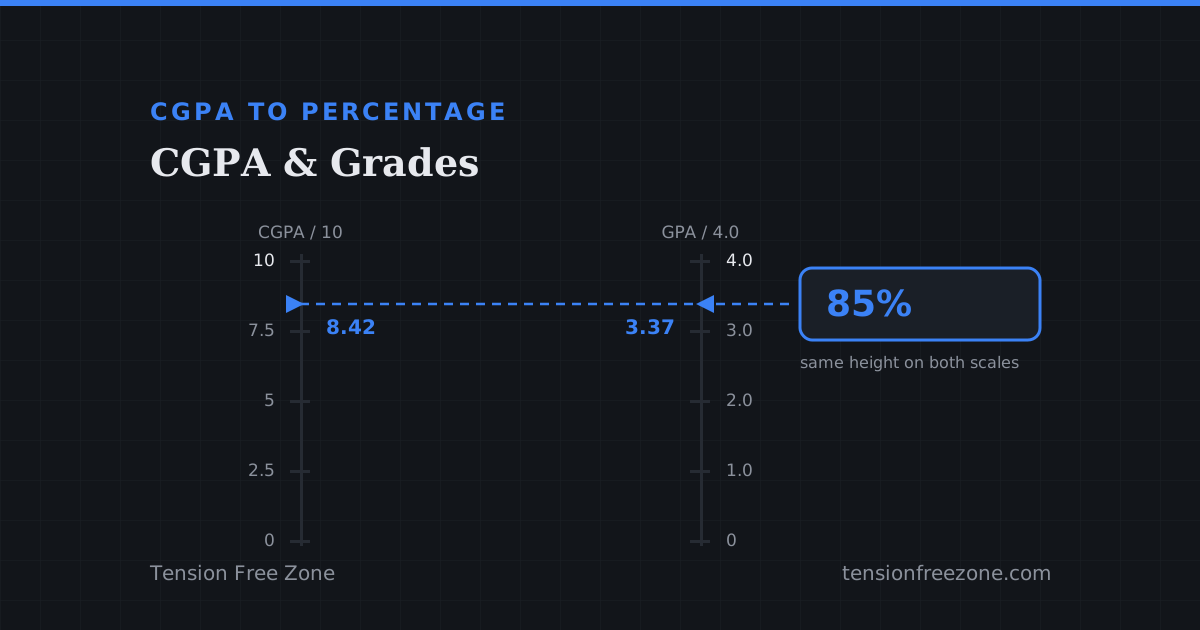
On a 4.0 scale the same arithmetic is meaningless. A CGPA of 3.4 multiplied by 9.5 is 32.3, which is why the multiplier cannot be carried across systems: the proportional reading is 85 percent, and that is the figure to quote if the institution has no published rule. When in doubt, quote both the CGPA and the scale, because a reader who knows the system can convert it themselves and a reader who does not will at least see that it is a 4.0 result.
Finding your own university's rule
Look for the phrase conversion formula in the examination handbook or the results notification, not on the department noticeboard. Most institutions state the rule once, in a line under the grading scheme, and the same line usually says whether the result is rounded and at which decimal place.
If the handbook is silent, ask for the conversion certificate. It is a one-page document, it is issued routinely for exactly this purpose, and it removes the ambiguity from every form you fill in afterwards. A number you can point at is worth more than a number you derived.
Keeping the CGPA itself honest
The conversion is the last step, and it is only as good as the CGPA underneath it. That figure is credit-weighted across every semester: total credit points divided by total credits, not an average of the semester averages. The difference is small when semesters carry equal credits and large when a final year is heavier, which is when people discover their mental arithmetic has been wrong for three years.
The CGPA and grade calculator does that weighting course by course and carries the totals into the CGPA, so the figure you convert is the one your transcript will print. If the form only wants one subject's percentage, the percentage calculator handles the change, the reverse calculation and the rounding.