The 0.18 Gap: The Precise Math I Needed to Protect My Honours Degree
How the what-if planner on a 10 point CGPA calculator works out the SGPA you need for a target, and why the credits behind each grade decide the answer.
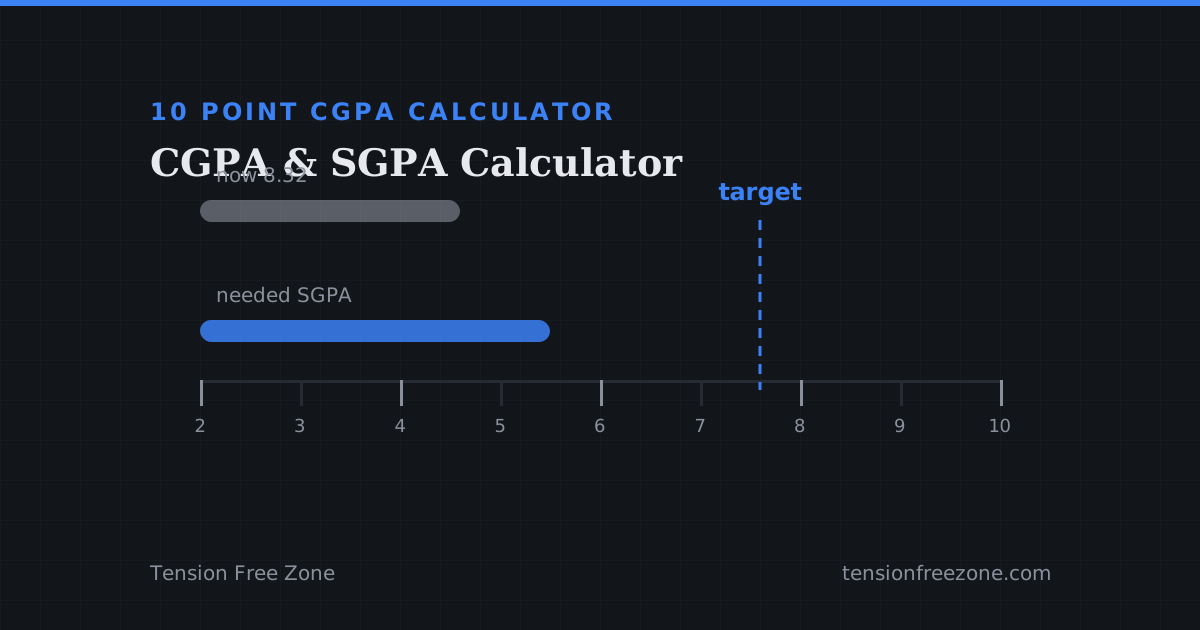
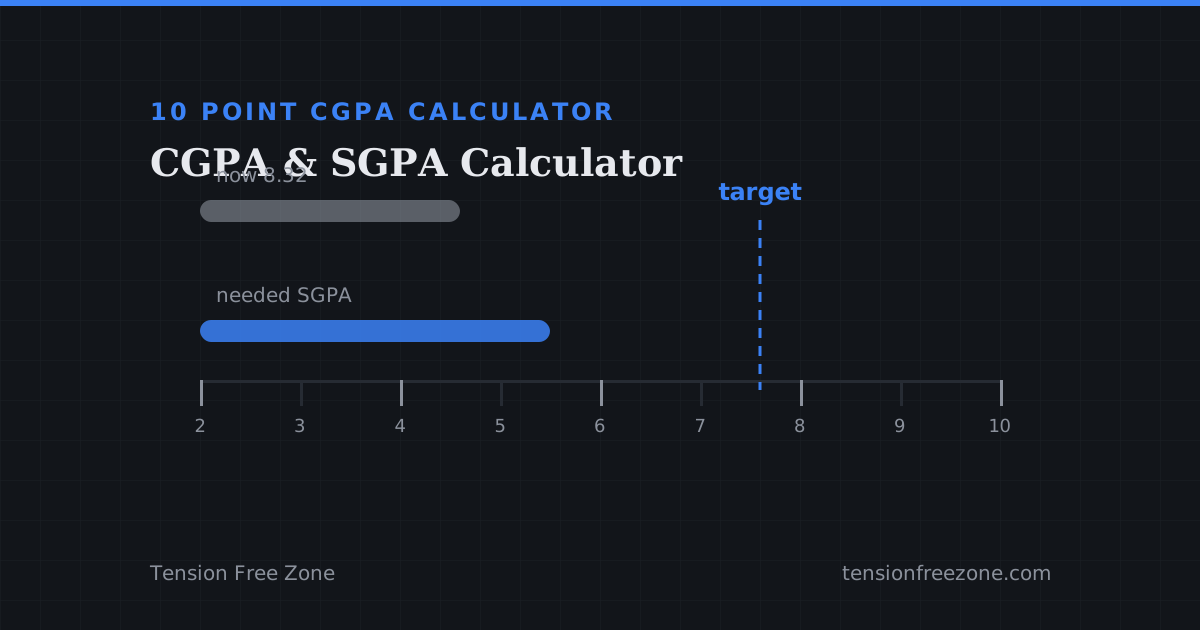
The postgraduate cut off is 8.5 and the transcript reads 8.32. At that point there is exactly one useful question, and a 10 point cgpa calculator with a what-if planner answers it: what does the remaining semester have to average, given how many credits it carries.
Guessing produces either panic or false comfort, and both are avoidable. The arithmetic is not complicated; what makes it feel impossible is doing it in your head with the credits in the wrong places.
Why credits decide the answer
A CGPA on a ten point scale is a weighted average. Each course contributes grade points equal to its grade multiplied by its credits, and the CGPA is the total of those quality points divided by the total credits taken.
That is why a four credit mathematics course moves the number more than a one credit elective, and why a semester with heavy courses can lift a CGPA faster than its grade sheet looks like. Any calculation that treats every course as equal gives the wrong answer in whichever direction the heavy courses lean.
Solving for the semester you need
The CGPA planner works backwards. You enter the credits already banked, the CGPA already earned, the credits still to come and the target, and it reports the average grade you need across those remaining credits.
Reading that number is the part worth slowing down for. It is a required average, not a prediction: it says nothing about whether the courses are hard or whether the timetable is brutal. It does say whether the grade you need is one you have ever achieved before, which is a far more useful thing to know in week three than in week thirteen.
When the answer is not a number you can reach
If the required average comes back above the top of the scale, the arithmetic is telling you something specific rather than failing. At the credits remaining, that target is out of range, and no amount of application changes it.
That is worth knowing early, because it turns a vague anxiety into a decision: improve the marks that can still be improved, look at how the degree class is actually awarded in your programme, or aim at a different cut off. A calculator that only ever reported comfortable answers would be useless on exactly the day it is needed.
- Check the scale your university uses, because 4.0 and 10 point systems both appear in the same country.
- Enter credits, not course counts, even when the handbook makes it tempting to skip.
- Re-run it after results arrive, since the remaining credits are the input that changes most.
A transcript is personal data
A grade sheet is a detailed record of how someone performed over several years, attached to a name and usually an institution. Sites that ask you to upload one to calculate an average are receiving a document they have no reason to keep.
This calculation is multiplication and division on about ten numbers. It runs in the tab, it works offline, and nothing about the student needs to leave the device to get an answer.