The 25 Percent Illusion: How a Markup Mistake Almost Sank My Side Hustle
Why a 25 percent markup is a 20 percent margin, how to price a product once, and where a markup vs margin calculator and a reverse percentage check fit in.
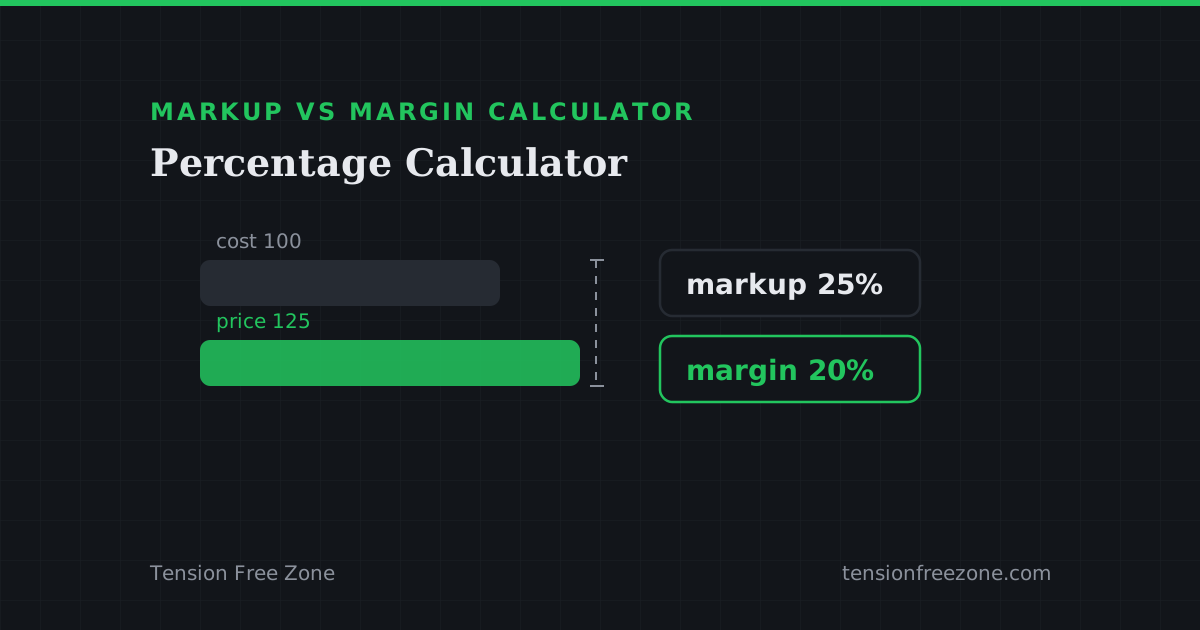
The price was set by adding 25 percent to the cost, and the spreadsheet reports a margin of 20. Nothing is broken anywhere. A markup vs margin calculator puts both numbers side by side, which is usually enough to see that markup is measured against what you paid and margin against what you charged.
Getting that wrong once is survivable. Pricing a whole catalogue on it is how a side hustle loses money for a year without noticing.
The arithmetic, and why the two numbers disagree
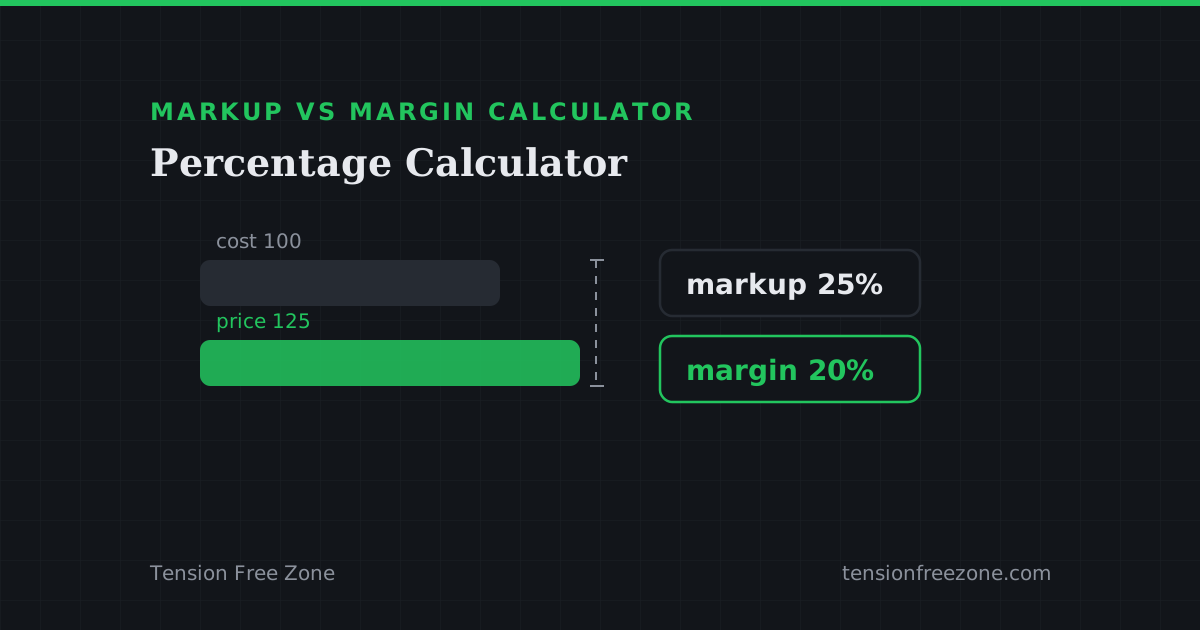
Buy something for 100 and sell it for 125. The markup is 25 percent, because 25 is a quarter of 100. The margin is 20 percent, because 25 is a fifth of 125. Same trade, two different fractions, and the one that matters at the end of the month is the margin, since that is the share of revenue you keep before expenses.
Working the other way is where it goes wrong quietly. To earn a 25 percent margin you divide the cost by 0.75 rather than multiplying it by 1.25, which gives 133.3 rather than 125. An 8 rupee gap on a small item is noise; across two hundred orders a month it is a real amount of money.
Which number to use, and when
Both are useful and they answer different questions. Markup is the working tool when you set a price from a cost, because that is how suppliers and catalogues think. Margin is the honest check on whether the business works, because it is measured against the revenue that actually arrives.
A practical habit: price with markup, then verify with margin, and if the margin is thinner than expected, the answer is usually that the cost figure left something out rather than that the markup was wrong.
Fees, discounts and working backwards
A marketplace that takes a cut and a payment processor that takes another are both part of the cost, and both arrive after the sale. The reverse calculation is the one to get comfortable with: given a cost, the fees and a profit you want per unit, what price produces it.
The percentage calculator handles the two problems that show up constantly in retail: successive discounts, where 20 percent then 10 percent is not 30 percent, and reverse percentages, where a price of 1,180 includes 18 percent tax and you want the figure before it.
- Add processing fees and shipping to the cost before choosing a margin, not after.
- Never stack discounts by adding the percentages together.
- Check the margin after any change to a price, especially a sale.
The numbers your side hustle runs on
Cost prices, supplier terms and margins are the commercially sensitive part of a small business. The free calculators that store them are receiving a supplier list and a pricing strategy in exchange for a percentage.
None of this arithmetic needs a network. It is multiplication, division and subtraction, and running it in the tab means the numbers stay on the device where you already keep them, and the tool still works when you are pricing at a market stall with no signal.